Chefchaouen Travel Guide for Australians (2026)
Chefchaouen is Morocco's most photographed city — a mountain village painted entirely in blue, tucked into the Rif Mountains. Here's everything Australians need to know before visiting the Blue City.
Introduction
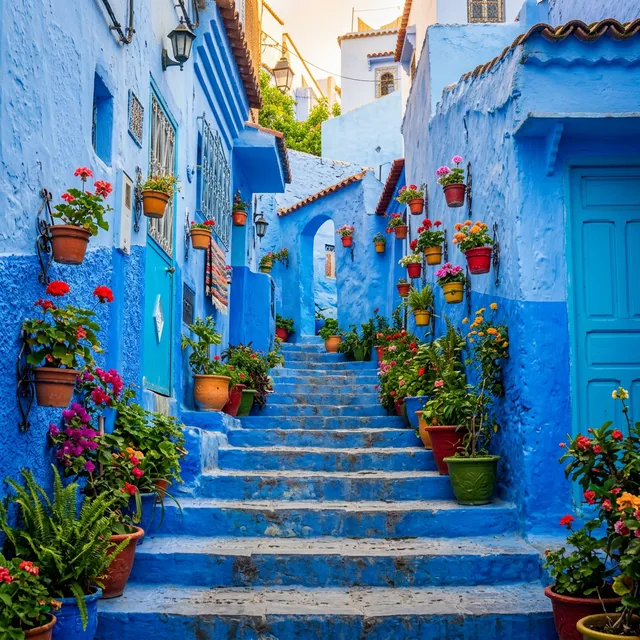
There is nowhere in Morocco quite like Chefchaouen. Tucked into a dramatic fold of the Rif Mountains, its medina is painted almost entirely in shades of blue — from pale sky to deep cobalt and every shade between — a tradition maintained for centuries that transforms every alleyway, doorway, and staircase into a photograph.
But Chefchaouen is much more than a photography backdrop. It is one of the most genuinely friendly, relaxed, and atmospheric cities in all of Morocco — a place where the people still smile at strangers simply because they are happy to see them. The pace here is mountain-slow. The air smells of cedar and wild thyme from the surrounding Rif forest. The mint tea arrives without being asked for.
Every Moroccan city is worth visiting for different reasons. Marrakech for spectacle. Fez for history. Essaouira for the sea and music. Chefchaouen is where you go to remember why you started travelling in the first place.
Quick Facts: Chefchaouen at a Glance
| 🏙️ Founded | 1471 by Moroccan and Andalusian refugees |
| 👥 Population | ~50,000 — one of Morocco’s most intimate cities |
| 📍 Location | Rif Mountains, northern Morocco (altitude ~600m) |
| 💙 Famous for | Blue-painted medina — the most photographed in North Africa |
| 🌡️ Climate | Mountain climate — cooler than lowland cities year-round |
| ✈️ Getting here | 3 hrs by bus from Tangier; 5 hrs from Fez |
| 🏨 Accommodation | Small riads inside the medina — book early |
| 🥾 Outdoors | Gateway to Talassemtane National Park hiking |
The History Behind the Blue
Chefchaouen was founded in 1471 by Moulay Ali ibn Rashid, a Moroccan Sherif, as a military post for resisting Portuguese incursions from the coast. The first settlers included Berbers from the surrounding Rif tribes and a significant community of Muslims and Jews expelled from Andalusia during the Spanish Reconquista — people escaping the end of eight centuries of Moorish Spain.
This Andalusian population brought with them their architectural traditions, their language (a form of Ladino, a Spanish-Hebrew hybrid, was still spoken in the city as recently as the 20th century), and their cultural practices. The blue paint came with them — in Jewish mystic tradition, blue represented the sky and the divine, and painting homes and synagogues in blue was a way of keeping heaven close.
For five centuries, Chefchaouen was almost completely closed to outsiders. Only three known Europeans had entered the city before 1920: a British missionary and two Spanish officers. The intense isolation preserved a culture utterly removed from the rest of Morocco — and it is precisely this preserved, layered identity that makes the city so compelling today.
Top 8 Things to Do in Chefchaouen
1. 💙 Simply Wander the Blue Medina
The most important (and most obvious) thing to do in Chefchaouen is also the least structured: lose yourself in the medina. Every alley is different. The blue ranges from pale aquamarine to deep midnight. Doors are painted in contrasting colours — terracotta, green, yellow. Cats of every colour sleep on blue steps in blue lanes under blue sky.
The medina covers a relatively small area — you can walk the entire circumference in 30 minutes — but the pleasure is in the depth rather than the breadth. Go down every alley. Look up at every doorway. Come in the early morning (before 8am) and in the late evening (after 8pm) when the light is golden and the tourists are scarce.
Photography tip: The golden hour 45 minutes after dawn produces extraordinary light on the blue walls. Set an alarm.
2. 🕌 Plaza Uta el-Hammam
The city’s main square, Uta el-Hammam (Place Mixte in French), is where all life in Chefchaouen concentrates: the 15th-century mosque with its distinctive octagonal minaret, the red kasbah fortification, café terraces shaded by orange trees, and the continuous flow of local and international life that makes people-watching here one of the great pleasures of Moroccan travel.
Sit at any café terrace — Café Clock or the blue-fronted cafés on the north side — order mint tea (with pine nuts, the Chaouen way), and watch the city move. You will inevitably stay much longer than you planned.
3. 🏔️ Spanish Mosque Viewpoint
The best view in northern Morocco: a 20-minute uphill walk from the medina leads to the Mosquée Espagnole — a disused mosque built during Spanish occupation — on the rocky hillside above the city. From here, the entire blue medina spreads out below you, framed by the canyon of the Rif Mountains and the Ras el-Maa gorge.
Come at sunset. The light turns the blue walls gold and the sky orange, with the medina glowing in the valley below. It is one of those genuinely unforgettable travel moments.
Practical info: Free walk. Takes 20 minutes uphill from the main square. Bring water.
4. 💧 Ras el-Maa Waterfall
At the far northern end of the medina, where the city ends and the mountain forest begins, the Ras el-Maa spring emerges from the rock and falls into a natural pool. Local women still use this traditional spot to wash laundry — wooden boards on the rocks, the sound of running water — in a scene that has looked the same for centuries.
Walk upstream for 5–10 minutes into the cedar forest above the city for total solitude and extraordinary mountain air. This is where Chefchaouen remembers it is a mountain village.
5. 🏛️ The Kasbah Museum
The Kasbah of Moulay Ali ibn Rashid — the original 15th-century fortress at the heart of the medina — now houses a small ethnographic museum with exhibits on the city’s history, its Andalusian and Berber heritage, traditional crafts, and the evolution of the blue medina. The shaded central courtyard with its garden and central fountain is a peaceful place to sit.
The views from the top of the kasbah tower extend over the medina rooftops and into the Rif mountain valleys beyond.
Practical info: Entry 20 MAD (~3 AUD). Open daily except Tuesday.
6. 🥾 Talassemtane National Park
For Australian travellers who want to hike, Chefchaouen is the gateway to Talassemtane National Park — a protected area of 58,000 hectares of Mediterranean cedar and fir forest, dramatic limestone gorges, and Rif mountain peaks reaching 2,000 metres.
The most popular day hike (no guide needed) is the Akchour Waterfalls trail — a 2–3 hour walk through a river gorge to a dramatic cascade. Grand taxis run from Chefchaouen to Akchour village (40 MAD per person).
For longer treks — 2 to 5 days in the mountains — a local guide is recommended and relatively inexpensive (400–600 MAD/day). Ask at your riad for recommendations.
7. 🛍️ Chefchaouen’s Crafts & Souks
The craft souk is more authentic than most Moroccan cities. Look for:
- Woollen blankets and djellabas — the Rif mountain weaving tradition produces thick, warm, incredibly durable woollen items in rich colours.
- Berber jewellery — silver pieces with the angular geometric motifs specific to northern Moroccan Berber culture.
- Embroidered textiles — tablecloths, cushion covers, and wall hangings.
- Honey and olive oil — Rif mountain honey is considered among the finest in Morocco.
Prices here are significantly lower than Marrakech for equivalent quality. Bargaining is normal but the initial prices are usually already fair — a gentle 10–15% negotiation is appropriate.
8. 🌙 Night Walk in the Medina
Chefchaouen’s medina after 9pm is a completely different experience from the daytime. The tourist crowds disappear, the lanes glow with warm lamp light against the blue walls, and the city exhales into a genuine neighbourhood evening. Families sit in doorways; the scent of mint tea and grilled kefta drifts from open kitchens; Gnawa music filters from a café.
Walk slowly. This is the most genuine version of the city.
Where to Stay in Chefchaouen
| Type | Location | Price Range (per night) |
|---|---|---|
| Budget riad | Deep medina | 120–250 MAD (20–40 AUD) |
| Mid-range riad | Central medina | 300–600 MAD (50–100 AUD) |
| Boutique hotel | Medina or upper town | 600–1,200 MAD (100–200 AUD) |
Recommended: Any riad within the blue medina gives the most immersive experience. Book at least 2–3 months ahead for spring and summer.
Where to Eat in Chefchaouen
- Restaurant Beldi — Traditional Moroccan food in a courtyard setting; reliable and genuine.
- Bab Ssour Restaurant — On the medina ramparts with views over the city; good tajines at fair prices.
- Café Clock Chefchaouen — Cultural café known for camel burger (the local speciality), music events, and language exchange evenings.
- Plaza Uta el-Hammam cafés — For breakfast: msemen flatbread, argane honey, and fresh orange juice from any terrace.
- Street food — Bocadillo sandwiches (Spanish-influenced), sfenj (Moroccan doughnuts), and fresh fruit are everywhere and cost almost nothing.
Getting to Chefchaouen
| From | Method | Duration | Cost |
|---|---|---|---|
| Tangier | CTM bus or grand taxi | 3 hrs | 60–80 MAD |
| Fez | CTM bus | 4.5–5 hrs | 80–100 MAD |
| Tetouan | Grand taxi | 1.5 hrs | 30–40 MAD |
| Casablanca | Bus via Tangier | 6–7 hrs | 120–150 MAD |
Combining cities: Chefchaouen works perfectly as part of a northern Morocco circuit — Casablanca → Rabat → Tangier → Chefchaouen → Fez → Meknes. This route covers the imperial cities and the north in a 10–12 day itinerary.
Explore our full Morocco Itineraries for more destination guides.