Is Morocco Safe for Australian Tourists? Smartraveller Advice (2026)
Smartraveller rates Morocco 'Exercise a high degree of caution'. What that means in practice, from 15 years of guiding Australians safely. Updated 2026.
Overview: Morocco Safety for Australians
Morocco is one of the most popular travel destinations in Africa, and for good reason. From the vibrant souks of Marrakech to the sweeping dunes of the Sahara Desert, it offers experiences unlike anywhere else on Earth.
But if you’re an Australian planning your first trip, you’ve probably wondered: “Is Morocco actually safe?”
The short answer? Yes, Morocco is safe for Australians. The country welcomes over 14 million tourists annually, and serious incidents involving visitors are rare. That said, being prepared and aware will make your trip infinitely better.
This guide covers everything you need to know — from petty scams to regional safety, solo female travel, and health precautions — all tailored specifically for Australian travellers.
Overall Safety Rating
Morocco consistently ranks as one of the safest countries in North Africa. Here’s how it stacks up:
| Safety Metric | Rating |
|---|---|
| Global Peace Index 2025 | 84th out of 163 countries |
| Tourism Police Presence | Strong in major cities |
| DFAT Travel Advisory (Smartraveller) | Exercise a high degree of caution (level 2 of 4) |
| Violent Crime Rate | Low for tourists |
| Petty Crime Rate | Moderate (mostly in tourist areas) |
The Department of Foreign Affairs and Trade (DFAT) — via Smartraveller — currently rates Morocco as “Exercise a high degree of caution” overall, citing the threat of terrorism. That’s level 2 on Smartraveller’s four-level scale. A separate “Do not travel” warning applies only to the area around the Berm in Western Sahara, far from any tourist route. In practice, level 2 means stay alert in crowded places, avoid protests and demonstrations, and keep an eye on the news — not that you should cancel your trip.
💡 Pro tip: Register with the Australian Government’s Smartraveller service before your trip. It’s free and provides real-time safety updates for Morocco.
Safety by Region
Not all regions of Morocco present the same level of risk. Here’s a breakdown:
Marrakech
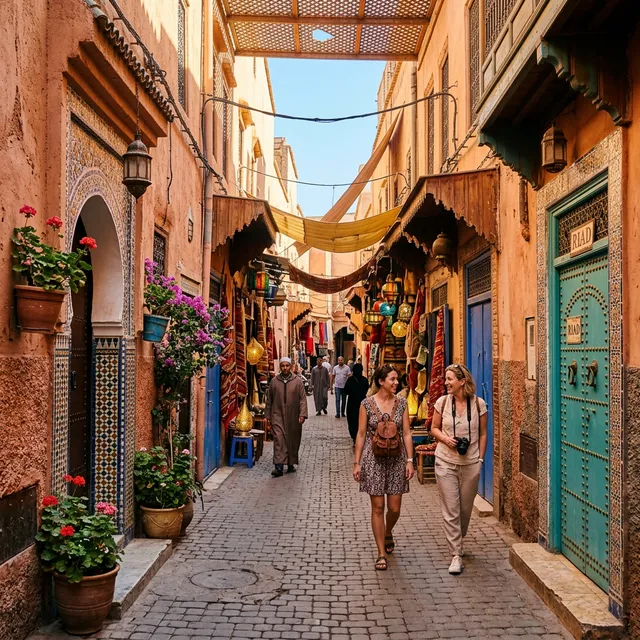
Morocco’s most visited city is generally safe, but it’s also where you’ll encounter the most scams and touts. The medina can be overwhelming, especially at night. Stick to well-lit main streets after dark and always negotiate prices before agreeing to anything.
Fes
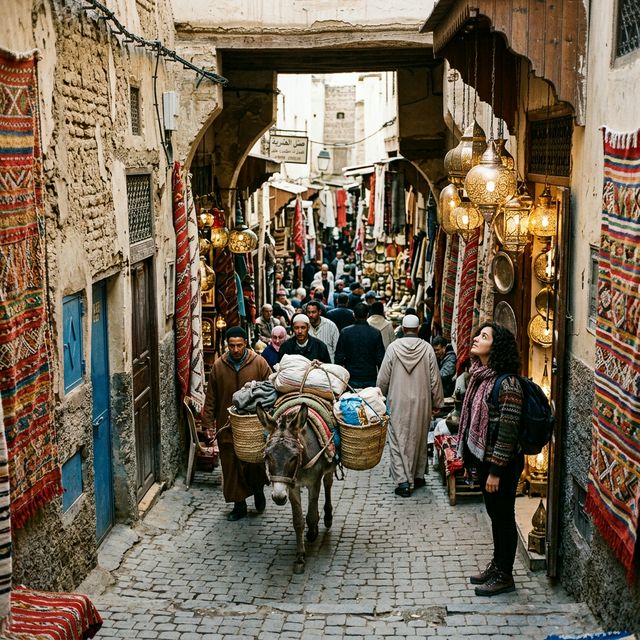
The ancient medina of Fes is a UNESCO World Heritage site and one of the world’s largest car-free urban areas. It’s easy to get lost here (and that’s part of the fun), but unofficial “guides” will approach you constantly. Politely decline if you don’t need help, and only hire guides through your riad or the official tourist office.
Chefchaouen
The famous “Blue City” is one of the safest places in Morocco. It’s small, walkable, and incredibly tourist-friendly. This is an ideal first stop for nervous first-time visitors.
Sahara Desert (Merzouga / Zagora)
Desert tours are a highlight of any Morocco trip. Book through reputable operators (your riad can recommend trusted companies). The desert itself is safe, but the drive through remote areas can be long. Always travel with a licensed guide.
Casablanca
Morocco’s largest city feels more businesslike than touristy. It’s generally safe during the day, but some areas (particularly around the port and train station at night) warrant extra caution. Use taxis or rideshares after dark.
Essaouira
This laid-back coastal city is extremely safe and popular with surfers, artists, and families. It’s a fantastic alternative to the intensity of Marrakech.
Common Scams and How to Avoid Them
Being aware of scams is half the battle. Here are the ones Australians most commonly encounter:
1. The “Free” Henna Scam
Women (usually near the Jemaa el-Fnaa in Marrakech) will grab your hand and start applying henna before you can react. Then they’ll demand 200-500 MAD (A$30-75). Prevention: Keep your hands in your pockets in busy squares. If they start, firmly say “La, shukran” (No, thank you) and walk away.
2. Unofficial Guides
Men or young boys will offer to “help” you find your riad or a famous landmark, then demand a tip. Sometimes they’ll lead you to a souk where they earn commission. Prevention: Learn your route beforehand, use Google Maps offline, and politely decline offers of help.
3. The “Closed Mosque/Riad” Trick
Someone will tell you a landmark is closed and offer to take you somewhere “better” — usually a shop. Prevention: Go check for yourself. If it’s genuinely closed, there will be a sign.
4. Overcharging in Taxis
Older petit taxis may not use the meter. Prevention: Always insist on the meter (“al compteur, safi”) or agree on a price before getting in. As a guide, most rides within Marrakech medina should be 15-30 MAD (A$2-5).
5. High-Pressure Market Sellers
This isn’t a scam per se, but aggressive selling in souks can feel confrontational. Prevention: Don’t show too much interest in an item unless you want it, start negotiating at about 30-40% of the asking price, and walk away if the price doesn’t suit — the seller will often call you back with a lower offer.
Solo Female Travel in Morocco
Morocco has a growing reputation as a solo female travel destination, though it does require some additional awareness:
What to Expect
- Catcalling does happen, particularly in larger cities. It’s usually verbal and rarely escalates.
- Covering up (shoulders and knees at minimum) significantly reduces unwanted attention.
- Riads and guesthouses are generally run by families and are very welcoming to solo female guests.
Top Tips for Solo Female Travellers
- Dress modestly — Loose-fitting clothes that cover shoulders and knees. A scarf is handy for visiting mosques and conservative areas.
- Use official transport — Book through your riad or use apps like inDrive. Avoid hitchhiking.
- Trust your instincts — If something feels off, walk away. Moroccans are generally very helpful, but not every person who approaches you has good intentions.
- Stay connected — Buy a local SIM card (Maroc Telecom or Orange) for about A$5. Having internet access for maps and messaging is invaluable.
- Join group tours — For activities like desert trips, joining a group tour adds a layer of safety and social fun.
Health and Food Safety
Tap Water
Don’t drink it. Bottled water is cheap (about 5-7 MAD / A$0.75-1 per 1.5L) and available everywhere. Also avoid ice in drinks at street stalls.
Street Food
Morocco’s street food is incredible and generally safe if you follow these rules:
- Eat where locals eat — High turnover means fresh food.
- Look for cooked food — Tagines, grilled meats, and msemen (Moroccan pancakes) are all cooked to order.
- Avoid raw salads at street stalls — These may be washed in tap water.
- Carry hand sanitiser — Not all street stalls have handwashing facilities.
Medications
Bring any prescription medications in their original packaging with a doctor’s letter. Pharmacies in Morocco are well-stocked and pharmacists are knowledgeable (and often speak French and/or English), but specific Australian brands may not be available.
Travel Insurance
Absolutely essential. Make sure your policy covers Morocco and includes:
- Medical evacuation
- Adventure activities (if doing desert tours, quad biking, etc.)
- Lost/stolen belongings
- COVID-related issues
Australian providers like Cover-More, World Nomads, and Allianz all offer good Morocco coverage.
Money and ATM Safety
Currency
The Moroccan Dirham (MAD) is the local currency. As of 2026, 1 AUD ≈ 6.5 MAD.
ATM Tips
- Use ATMs inside banks during business hours when possible.
- Cover your PIN when entering it.
- Notify your Australian bank before travelling to avoid card blocks.
- Carry a backup card from a different bank.
- Wise (formerly TransferWise) and Revolut cards work well in Morocco and avoid foreign transaction fees.
Cash vs Card
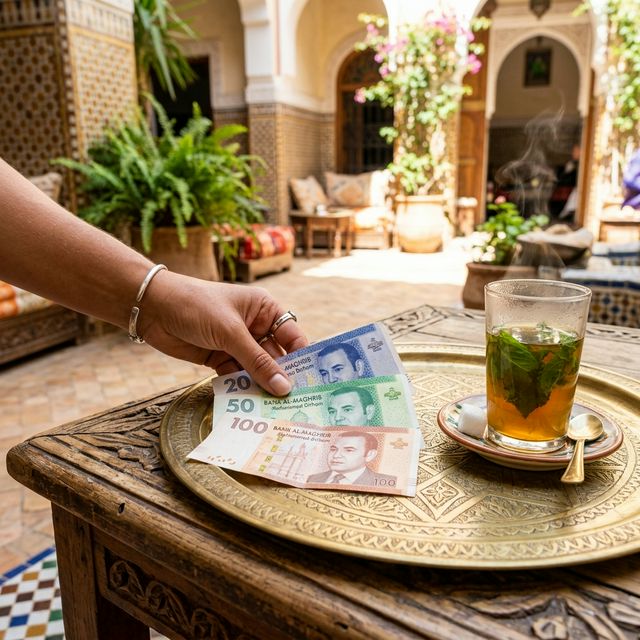
Morocco is still largely a cash economy, especially in souks, markets, and rural areas. Always carry small denominations (20 and 50 MAD notes) for tips, taxis, and small purchases. Hotels, upscale restaurants, and larger shops generally accept cards.
Emergency Contacts for Australians in Morocco
Keep these numbers saved in your phone:
| Service | Number |
|---|---|
| Police | 19 |
| Ambulance | 15 |
| Fire | 15 |
| Tourist Police (Marrakech) | +212 524 384 601 |
| Australian Embassy (Rabat) | +212 537 687 660 |
| Smartraveller 24hr Consular Emergency | +61 2 6261 3305 |
Final Thoughts: Should You Visit Morocco?
Absolutely. Morocco is a safe, welcoming, and unforgettable destination for Australians. The key is being informed, respectful, and prepared — which you’re already doing by reading this guide.
Millions of tourists visit Morocco every year without incident. With the right preparation, your biggest problem will be choosing between a tagine and a couscous for dinner.
Ready to plan your trip? Check out our Morocco Itineraries or browse our Accommodation Guide for where to stay.
Last updated: September 2026. Information is reviewed regularly for accuracy. Always check Smartraveller for the latest Australian travel advisories.